

Fall is one of the most important times of year for homeowners to evaluate the condition of their roof. After a summer of storms, heat, and UV exposure, and just before snow and freezing temperatures arrive, a fall roof inspection helps identify issues that could become major problems during winter.
For Michigan homeowners, scheduling a fall roof inspection is a proactive step that protects your home, extends roof lifespan, and helps avoid emergency repairs when weather conditions are at their worst.
Why Fall Is the Ideal Time for a Roof Inspection
Fall offers moderate temperatures and stable weather conditions, making it easier and safer to inspect roofing systems thoroughly. It also provides a critical opportunity to address damage before snow and ice complicate repairs.
According to the National Roofing Contractors Association, seasonal roof inspections are one of the most effective ways to prevent premature roof failure and costly repairs.
Summer Damage Often Goes Unnoticed
Michigan summers bring strong storms, heavy rain, wind, and hail, all of which can weaken roofing materials. Many forms of damage are not immediately visible from the ground.
Common summer-related roof issues include:
- Loosened or lifted shingles
- Granule loss from asphalt shingles
- Damaged flashing around vents and chimneys
- Clogged gutters filled with leaves and debris
When these issues are not addressed in fall, they often worsen during winter. Homeowners experiencing visible wear should review options on our Roof Repair Michigan page.
Preventing Winter Leaks and Ice Dams
One of the primary goals of a fall roof inspection is preventing ice dams and winter leaks. Ice dams form when heat escapes into the attic, melts snow on the roof, and refreezes near the eaves.
Blocked gutters and roof edge damage significantly increase the risk of ice dams.
The U.S. Department of Energy explains that proper roof drainage, insulation, and ventilation are key to reducing ice dam formation.
Michigan homeowners should also review safe winter maintenance practices in our guide on How to Remove Ice Dams Safely.
What a Professional Fall Roof Inspection Includes
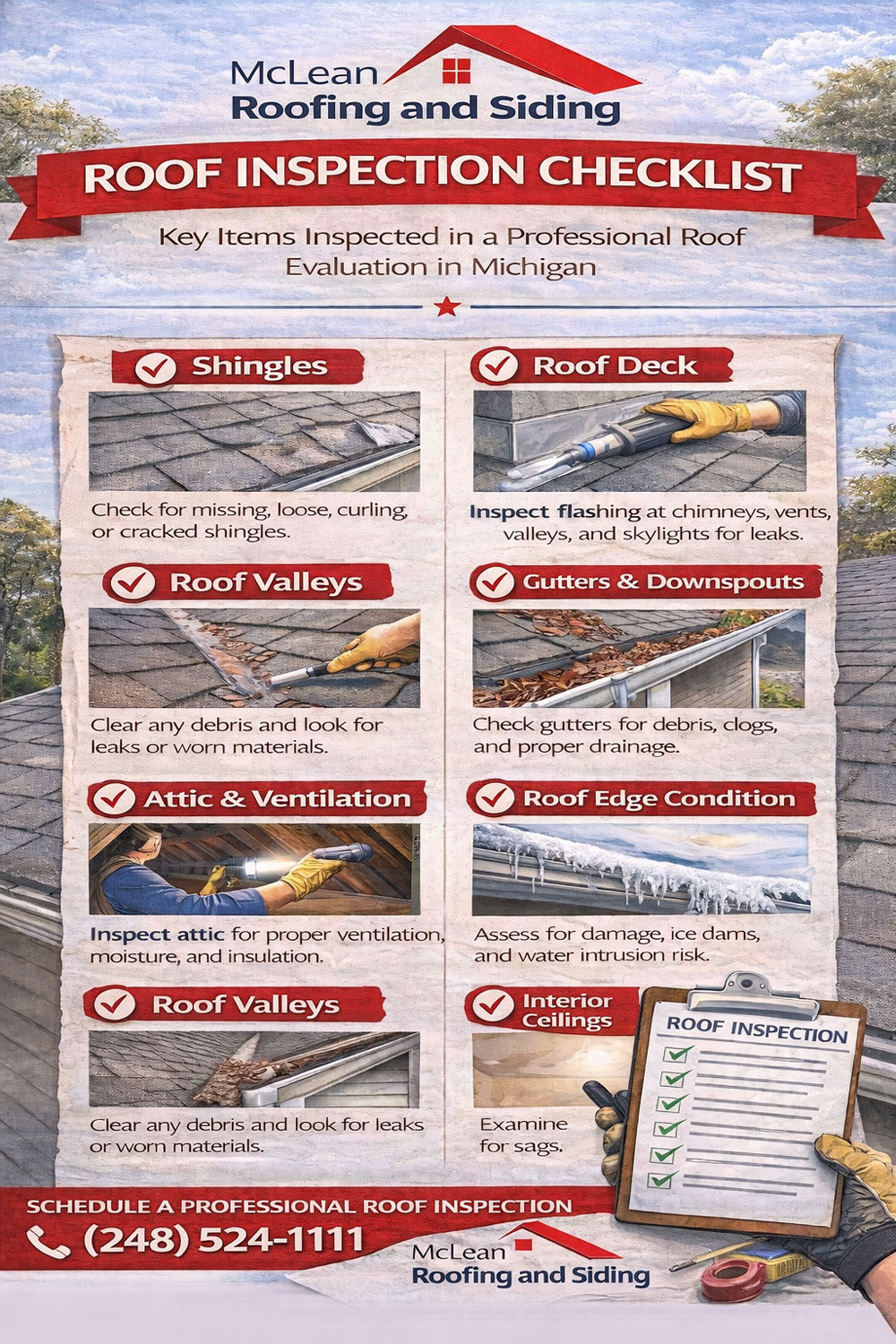
A professional roof inspection goes beyond a quick visual check. Contractors evaluate all components that affect roof performance.
A typical fall inspection includes:
- Checking shingles for cracks, curling, or missing sections
- Inspecting flashing, sealants, and roof penetrations
- Evaluating roof edges and fascia boards
- Assessing gutter condition and drainage flow
- Looking for signs of moisture intrusion or soft decking
Homeowners attempting basic checks should understand their limits. Our article on DIY Roof Inspection Tips explains what can be done safely and when to call a professional.
Gutters and Drainage Are Part of Roof Health
Gutters play a critical role in roof performance, especially during fall when leaves and debris accumulate. Clogged gutters prevent proper water flow and contribute to roof edge damage.
Preventative solutions such as gutter guards can reduce debris buildup and maintenance needs. Learn more about these systems on our Benefits of Gutter Guards page.
Fall Inspections Help Plan Ahead
Not every inspection reveals an urgent problem. In many cases, fall inspections help homeowners plan future repairs or replacement on a realistic timeline.
If your roof is aging or showing widespread wear, early planning avoids emergency replacements during winter or peak storm seasons.
Homeowners considering long-term solutions can learn what to watch for in our guide on Signs You Need a New Roof.

Roof Inspections Support Whole-Home Maintenance
Roof health affects more than just shingles. Water intrusion and heat loss impact siding, insulation, windows, and interior finishes.
Fall inspections often uncover issues that connect to broader maintenance needs. Learn how proactive care reduces long-term costs on our Roof Maintenance Plan page.
Local Experience Matters for Michigan Homes
Michigan roofing systems face unique challenges due to snow loads, ice dams, and freeze-thaw cycles. Contractors familiar with local weather patterns know what problems to look for and how to address them effectively.
Homeowners seeking local expertise can explore services in nearby areas such as Roofing Contractor in Fraser, MI.
Why Waiting Until Winter Is Risky
Once winter arrives, roof repairs become more difficult and expensive. Snow-covered roofs hide damage, cold temperatures limit repair options, and emergency leaks often require immediate attention.
Scheduling a fall inspection allows homeowners to address issues under safer conditions and at a lower cost.
Conclusion
A fall roof inspection is one of the smartest steps Michigan homeowners can take to protect their home before winter. By identifying small issues early, improving drainage, and planning ahead, homeowners reduce the risk of leaks, ice dams, and emergency repairs.
If you have not scheduled your fall roof inspection, now is the time to ensure your roof is ready for the months ahead.