
Choosing the longest-lasting siding for homes is one of the most important exterior decisions homeowners can make. Siding is not only a visual element of curb appeal, but also a protective barrier against moisture, wind, temperature extremes, and long-term structural damage. In climates like Michigan, where homes experience freeze-thaw cycles, heavy rain, snow, and summer heat, durability matters more than ever.
This guide explains which siding materials last the longest, how they perform over time, and what factors homeowners should consider when choosing siding for long-term value.
What Makes Siding Long-Lasting?
The lifespan of siding depends on several key factors beyond just material type. Installation quality, climate exposure, maintenance, and moisture control all influence how long siding performs.
Long-lasting siding materials typically share these characteristics:
- Resistance to moisture, rot, and insects
- Ability to withstand temperature fluctuations
- Minimal maintenance requirements
- Strong resistance to impact and UV exposure
- Proper installation with moisture barriers and flashing
When these elements work together, siding can last for decades.
Brick Siding: One of the Longest Lasting Options
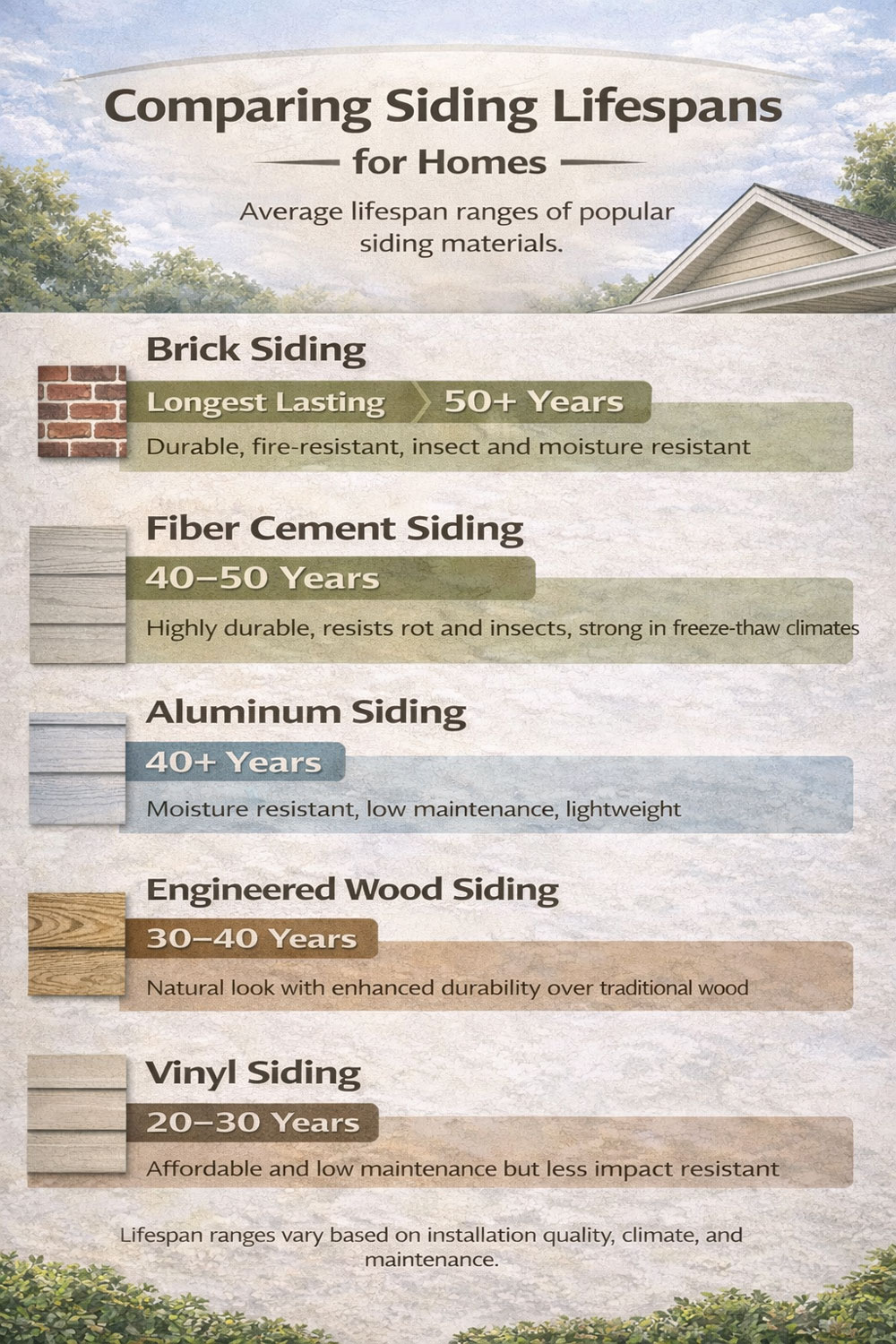
Brick is widely regarded as one of the longest-lasting siding materials available. When properly installed, brick siding can last 50 years or more, often outlasting the structure itself.
Why Brick Lasts So Long
- Resistant to fire, rot, insects, and moisture
- Does not warp or fade
- Minimal maintenance requirements
- Strong thermal mass helps regulate temperature
Brick performs especially well at ground level, where moisture exposure is highest. According to building science experts, masonry exteriors offer exceptional longevity when paired with proper drainage and wall systems.
Fiber Cement Siding: A High-Durability Alternative
Fiber cement siding is often considered one of the longest-lasting siding options for homes that want durability without masonry installation. Many fiber cement products last 40 to 50 years when maintained properly.
Advantages of Fiber Cement
- Resistant to fire, insects, and moisture
- Holds paint longer than wood
- Performs well in freeze-thaw climates
- Wide range of styles and textures
Fiber cement is heavier than vinyl or aluminum but lighter than brick, making it a popular compromise between durability and installation flexibility.
Engineered Wood Siding
Engineered wood siding is designed to improve upon traditional wood by increasing resistance to moisture and insects. While not the longest-lasting siding overall, high-quality engineered wood can last 30 to 40 years when properly installed and maintained.
Key Considerations
- Requires periodic painting or sealing
- More affordable than brick or fiber cement
- Offers a natural wood appearance
Proper flashing and moisture control are critical to maximizing lifespan.
Aluminum Siding Longevity
Aluminum siding has been used for decades and can last 40 years or more with proper care. It resists rot and insects, making it suitable for Michigan weather conditions.
Pros and Cons of Aluminum
- Does not rot or absorb moisture
- Low maintenance compared to wood
- Can dent from impact
- May fade over time
Aluminum siding performs best when paired with proper insulation and moisture barriers.
Vinyl Siding: Durability vs Longevity
Vinyl siding is popular due to affordability and low maintenance, but it is not typically considered the longest-lasting siding for homes. Average lifespan ranges from 20 to 30 years.
Limitations of Vinyl Siding
- Can crack in extreme cold
- May warp under heat
- Susceptible to UV fading
- Less impact-resistant than other materials
While vinyl works for many homeowners, those seeking maximum longevity often choose alternative materials.
How Climate Impacts Siding Lifespan
Michigan’s climate places unique stress on siding systems. Freeze-thaw cycles cause expansion and contraction, while snow and ice increase moisture exposure.
The U.S. Department of Energy emphasizes that proper moisture management and wall assemblies significantly affect exterior longevity.
Siding materials that resist moisture absorption and temperature stress perform best in northern climates.
Installation Quality Matters as Much as Material
Even the longest lasting siding for homes will fail prematurely if installed incorrectly. Proper installation includes:
- Weather-resistant barriers
- Correct flashing at windows and doors
- Proper ventilation and drainage
- Secure fastening and alignment
Learn more about professional siding installation on our Siding Installation page.
Siding Longevity and Home Value
Long-lasting siding materials often increase resale value by reducing future maintenance concerns. Buyers frequently view durable exteriors as a sign of quality construction and long-term investment.
Coordinating siding upgrades with roofing, gutters, and trim further enhances performance. Explore integrated exterior solutions on our Exterior Services page.
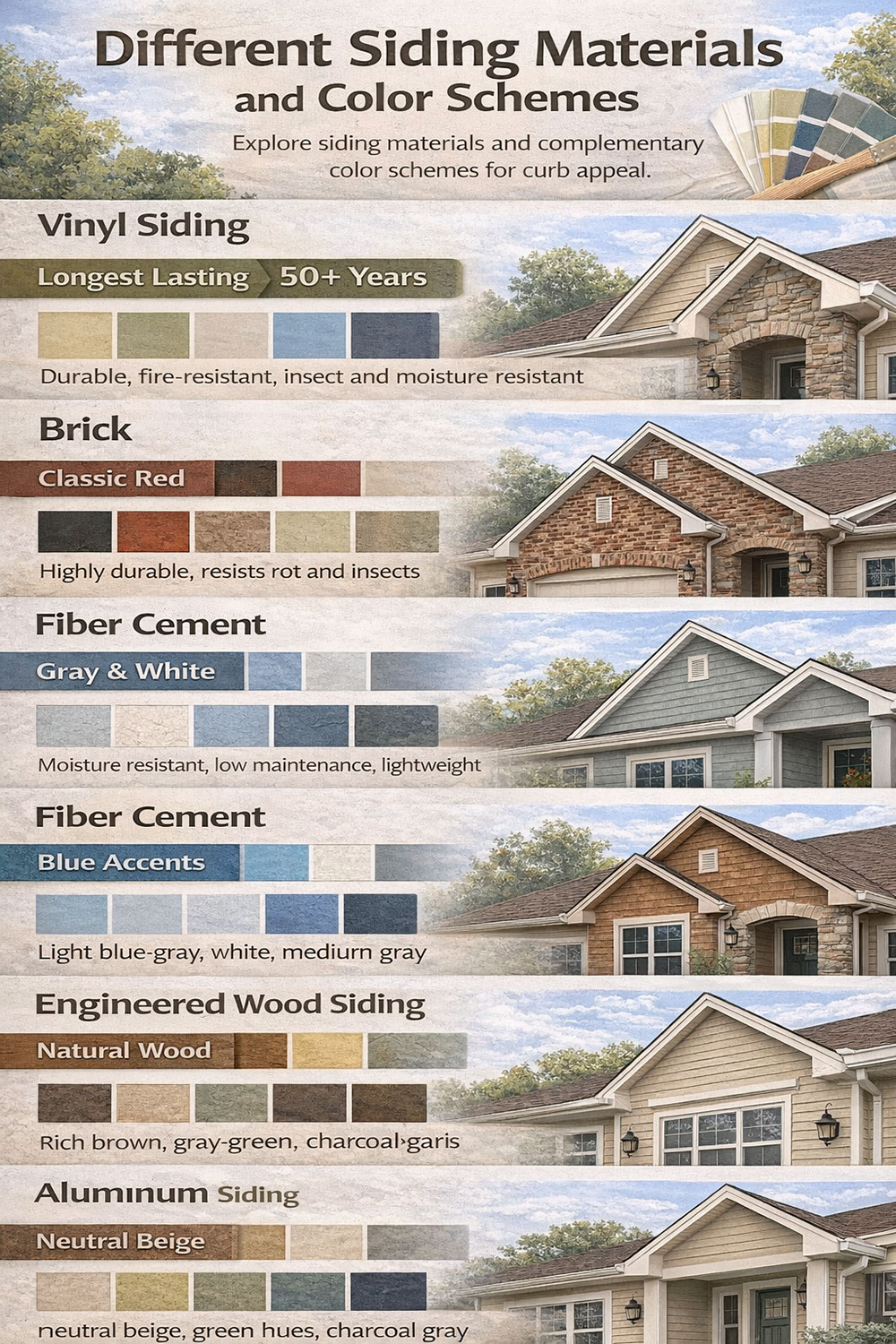
Discover the Many Different Options for Siding Materials and Beautiful Color Options
Frequently Asked Questions About the Longest Lasting Siding for Homes
What is the longest-lasting siding for homes?
Brick is generally considered the longest-lasting siding material, often exceeding 50 years. Fiber cement is another highly durable option with a lifespan of 40 to 50 years when properly installed.
Does siding last longer with professional installation?
Yes. Professional installation ensures proper moisture control, flashing, and alignment, which significantly extends siding lifespan.
Is maintenance required for long-lasting siding?
All siding requires some maintenance. Brick requires the least, while fiber cement and aluminum may need occasional cleaning or repainting.
Is the most durable siding also the most expensive?
Not always. While brick and fiber cement have higher upfront costs, they often provide better long-term value due to extended lifespan and reduced maintenance.
Conclusion
Choosing the longest-lasting siding for homes involves balancing durability, maintenance, climate performance, and long-term value. Brick and fiber cement consistently rank among the most durable options, while aluminum and engineered wood provide solid alternatives when properly installed. For Michigan homeowners, selecting high-quality materials and professional installation is the key to maximizing siding lifespan and protecting your investment.
Learn more about exterior siding solutions by visiting our Siding Installation, Roofing Services, Gutters Service, Window Replacement, and Exterior Services pages.