Snow-covered roofs are a common sight during Michigan winters, but excessive snow accumulation can pose serious risks to your home if it is not properly managed. Heavy snow loads, ice buildup, and repeated freeze-thaw cycles place significant stress on roofing systems, gutters, insulation, and structural components.
This guide explains how snow affects your roof, when it becomes dangerous, what homeowners should and should not do, and when professional roofing services are necessary to prevent damage.
How Snow Impacts Your Roof
Roofs are designed to handle a certain amount of snow, but prolonged accumulation can create problems. Wet, compacted snow is especially heavy and can strain roof framing, decking, and fasteners. Over time, this stress may lead to sagging, cracks, or structural failure.
According to the National Roofing Contractors Association, snow accumulation combined with ice dams is one of the most common causes of winter roof damage in cold climates.
When Snow on the Roof Becomes a Problem
Not every snowfall requires action, but certain conditions indicate elevated risk:
- Snow depth exceeding one foot of heavy, wet snow
- Visible sagging or uneven rooflines
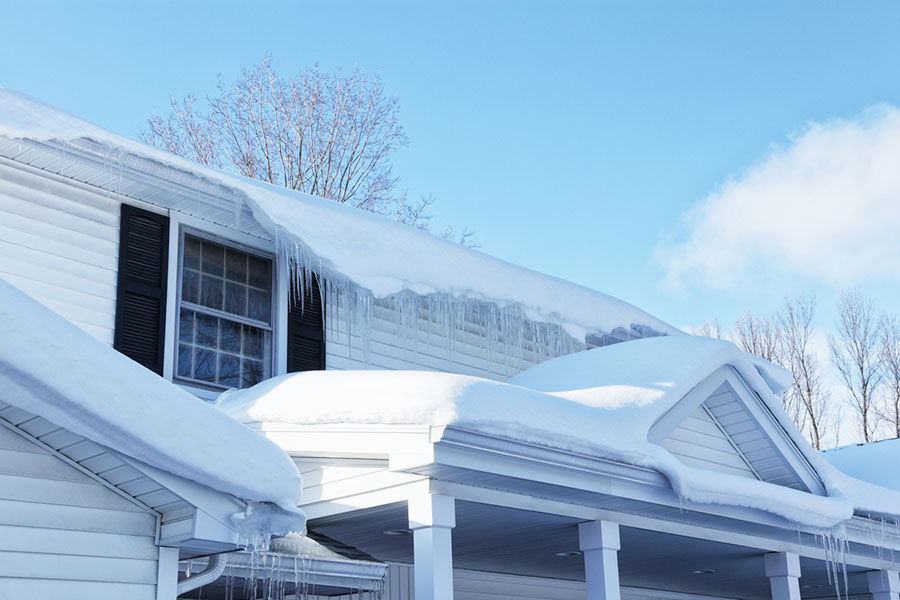
- Ice dams forming along roof edges
- Interior leaks or water stains during winter
- Snow sliding and blocking gutters or downspouts
Michigan’s fluctuating winter temperatures often turn snow into ice, which traps water on the roof surface and increases the likelihood of leaks.
Ice Dams and Why They Are Dangerous
Ice dams form when heat escapes into the attic, melting snow that refreezes near the roof edge. This ridge of ice prevents proper drainage, forcing water under shingles and into the roof system.
Ice dams can damage shingles, flashing, gutters, insulation, and interior finishes. The U.S. Department of Energy explains that proper insulation and ventilation are critical to reducing ice dam formation.
Learn how insulation supports winter roof performance on our Insulation Services page.

Should You Remove Snow From Your Roof?
In many cases, snow will melt naturally without causing harm. However, removing snow may be necessary when accumulation becomes excessive or when ice dams begin to form.
Homeowners should never climb onto the roof to remove snow. Walking on icy or snow-covered shingles significantly increases the risk of falls and roof damage.
The Centers for Disease Control and Prevention reports that falls from ladders and roofs are a leading cause of winter injuries.
Safe Snow Removal Tips for Homeowners
If snow removal is necessary, safety should be the top priority:
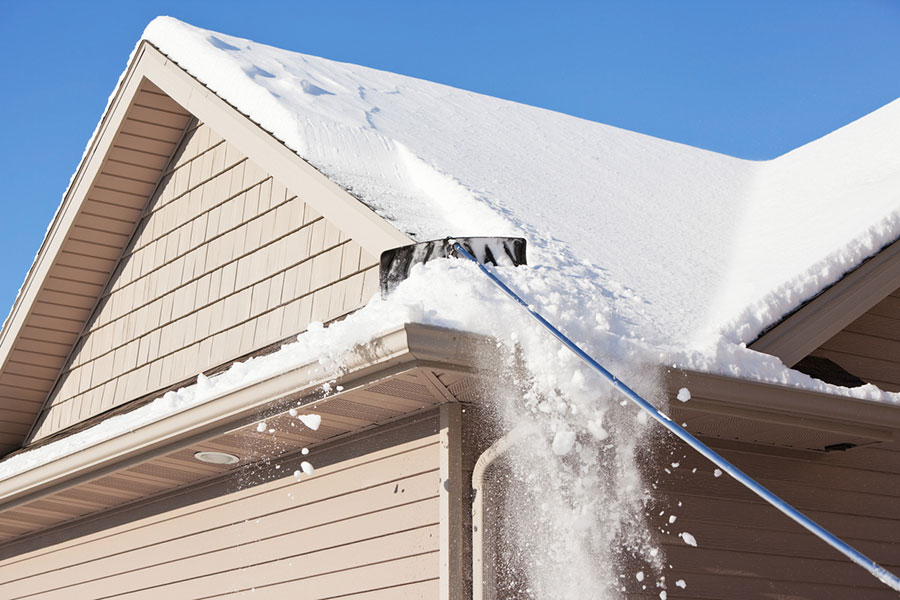
- Use a roof rake with a long extension from the ground
- Remove snow evenly to avoid creating unbalanced loads
- Never chip ice with sharp tools
- Keep clear of falling snow and ice
- Avoid working near power lines
Improper snow removal techniques can damage shingles, flashing, and gutters, often creating more problems than they solve.
How Gutters and Downspouts Are Affected by Snow
Snow and ice buildup can block gutters and downspouts, preventing proper drainage. When water cannot flow away from the roof, it backs up under shingles and causes leaks.
Well-designed drainage systems help reduce winter damage. Learn more on our Seamless Gutters and Downspouts page.
Snow Load and Structural Concerns
Older homes or roofs with previous damage are more susceptible to snow load issues. Warning signs of structural stress include creaking noises, cracked drywall, or doors that suddenly stick.
If you notice any of these signs, contact a professional roofing contractor immediately for evaluation.
Professional Roof Inspections After Winter Storms
Snow and ice damage is not always visible from the ground. Professional roof inspections can identify hidden issues such as:
- Loose or missing shingles
- Damaged flashing
- Compromised roof decking
- Ventilation problems
Scheduling an inspection after severe winter weather helps prevent small issues from becoming major repairs. Learn more on our Roof Inspection Michigan page.
When Roof Repair or Replacement Is Needed
Minor winter damage may be repairable, but repeated snow and ice issues often signal that a roof is nearing the end of its lifespan.
If repairs become frequent or damage is widespread, roof replacement may be the safest long-term option. A new roof designed for Michigan winters improves durability, energy efficiency, and peace of mind.
Explore replacement options on our Roof Replacement Michigan page.
How Other Exterior Systems Play a Role
Your roof works together with siding, windows, insulation, and gutters to protect your home during winter. Problems in one system can affect the others.
Drafty windows and damaged siding allow heat loss that contributes to ice dam formation.
Learn more about protecting your entire exterior on our Exterior Services page.
For siding and window upgrades, visit our Siding Contractor Michigan and Replacement Windows Michigan pages.
Why Michigan Homeowners Trust McLean Roofing and Siding
McLean Roofing and Siding has decades of experience helping Michigan homeowners protect their homes through harsh winters. Our team understands local weather conditions and provides roofing solutions built for long-term performance.
Learn more about our services on our Roofing Services page or visit McLean Roofing and Siding to schedule an inspection.
Conclusion
Snow on your roof is not always a problem, but ignoring excessive accumulation or ice dams can lead to serious damage. Understanding when to take action and when to call a professional helps protect your roof, your home, and your safety.
If you have concerns about snow or ice on your roof this winter, contact McLean Roofing and Siding for a professional roof inspection and expert guidance.